Tuesday, October 23, 2018

Third Bash

Two years ago, while on our annual summer RV trek, our neighbor called to inform us that someone had demolished our stucco mailbox.  She had a friend take the picture below.


Our mail was being forwarded to a private mail handling service so immediate replacement of the box was not an issue.  We had a handyman haul off the remains.  Shortly after we returned home, the mail carrier stopped by, told us she did it, gave us a claim form.  The USPS honored the claim, paid enough to replace the box in kind.

We decided to do a gabion column instead of stucco.  I took a jackhammer to the remains of the stucco box, and ordered the gabion parts, a locking mailbox and a set of metal house numbers.  Assembly was fairly easy but hauling the rocks was another matter.  We made numerous trips to a local rock place, hand picking the rocks and hauling them home in 5-gallon buckets.  Over a ton of rocks!

When the project was completed, we congratulated ourselves, and I said, "If they hit that, they'll know they really hit something!"


Sure enough, 3 weeks ago, it got bashed again.  Ruined.  And yes, whoever did the dirty deed bloody well knew it.  Couldn't prove it, but given the angle and height of impact, we're 99% sure it was the mail carrier.  Again.  The local post office 'investigated' but the alleged perp didn't confess (had already done a hit and run, so no surprise) and the vehicle's heavy duty rubber bumper appeared to be undamaged.  As they say in Russia, tough shit-ski.


I ordered new gabion parts and we built it all over again, much quicker this time cuz the rocks were already there.  I positioned the new box further back from the road, hopefully making it less vulnerable to dipstick mail carriers and demolition derby wannabees. 

That covers the 2 most recent bashes.  The first bash occurred several years ago.  Neighbor lady hit the old stucco box, causing cosmetic damage.  She paid for the repair. 

Wanna place a bet on how long it will be before it gets bashed again?  Given the history, I'm not betting.

Wednesday, October 17, 2018

Ribbit!


Ribbit!
Dirty Pour Acrylic Collage
12" Clay Pot

This is my first 'dirty pour' and first use of metallic acrylics.  When 2 or more colors are placed in the same container and then poured onto canvas, board, paper, whatever, it's called a dirty pour.  I used 4 colors on this flower pot.  A dirty pour is a total crapshoot.  The paint is in control rather than the painter.


Did it come out the way I wanted?  Uh, uh!  Not even close, much darker than I intended.  I like it though.  The frog was an afterthought, was on the cover of an old National Geographic sitting on the corner of my work table.  Froggie had been staring at me for 2 years: okay, froggie, got a whole new gig for you.  The green-dominant surface seemed a likely frog habitat.

It was a fun project, will definitely do more pours.

Many thanks to my good - and very creative - friend Lisa for giving me the idea.

Saturday, October 13, 2018

Green Yuk

Image result for cilantro images

Cilantro.  Am I the only person in the world that absolutely hates the stuff?  Where the devil did it come from anyway*?  Never even heard of it until a few years ago.  Now, it's everywhere: salsa, salad dressing, coffee, tea, every other entree on restaurant menus.  It's even in some ales!  Now, that's going too far, a crime against humanity if ever there was one.

And then there's arugula, not quite as repulsive as cilantro but a very close second .  Would rather wash my mouth out with soap.  The aftertaste would certainly be better.  Less long-lasting, too.  It's been a while since I've indulged in mouth soaping, but the memory remains.  This will come as no surprise to those who know me: I was a wise ass kid, got the soap 'cure' several times.  Sadly - or gladly, depending on your point of view - the cure didn't take.

Image result for arugula images

Now, don't get me wrong, I love salads!  Chef's salads especially.  Happily, Trish makes fantastic salads, both delicious and attractive ("First you eat with your eyes," she says).  Never, ever do they include the two maggot-gaggers named above.  There are lots of other edible salad makings.

Roughage.  That's what Mom called salads, a true roughage believer.  Ahead of her time, actually.  Never hear the term roughage anymore.  Now it's fiber.  A comedian on one of the SeriusXM channels has a routine about fiber.  He complains that his daughter, a nurse, is always pushing him to eat more fiber.  "Eat fiber, Daddy, lots and lots of fiber."  He goes on, "Fiber, fiber, fiber!  Twigs and leaves and bran!  Ate so much fiber I started passing wicker furniture."

*Cilantro has been in use for 5000 years or more, probably originated in India, thought to be an aphrodisiac, especially in Asia.  What's with the Asians and their weird aphrodisiacs?  Can't get it up?  There are more people of the Asian persuasion than any other ethnic group, so getting it up doesn't seem to be a major issue.

Friday, October 5, 2018

Ancients Among Us

Image result for crocodile images

Crocodiles and alligators.  Somehow these critters crawled into our dinner conversation.  We both knew they'd been around a long time, no idea how long of course.  I commented that cockroaches had been around a long time, too.  Trish isn't the least bit fond of roaches, doesn't even want to talk about 'em.  Can't say I'm a fan, either, but some folks like 'em.  Chinese folks especially; they have roach farms where they raise millions of 'em for food, cosmetics and medicines; $20 a pound.

Image result for cockroach images

Curiosity aroused, I googled it.  And the winner is...roaches!  Would you believe 350 million years?  Crocs and their cousins: 200 million years.  No contest.  Roaches survived while dinosaurs came and went, their window was 65-230 million years ago.

Still curious, I wondered what other ancient critters are still around.  And if roaches were the overall title holder.  Nope.  Several sea creatures are older (in millions of years): horseshoe crab 445; nautilus 500; jellyfish 550; sponge 580.  Are sponges critters?  Sure.  What the heck.

Nautilus

Image result for nautilus images

And now the moment you've all been waiting for, the overall winner, the longest living thing on earth.  Soup!  Well, it looks like soup.  Decidedly unappetizing soup.

Cyanobacteria, 2.8 billion years old

cyanobacteria

Although I see little resemblance to anyone in my family tree, these little fellas may be our common ancestor, the common ancestor of everything for that matter.  They were the first ever microbes to produce oxygen via photosynthesis.

Tuesday, September 25, 2018

Windex?

Shortly after entering western Idaho on I-84 this summer, we saw a solar power farm, then another one some time later.  Passing by the second one, it occurred to me that the panels need periodic cleaning and I asked Trish, "How do you suppose they clean those things?"  She, of course, was as clueless as I.  I followed up with, "There's probably a guy with a BIG bottle of Windex that does the cleaning.  It's his life's work.  Probably takes a year to clean them all, and by then the first one is dirty again.  Talk about job security."

The largest solar plant in the US is Solar Star in Rosamond, CA: 3200 acres, 1.7 million panels, 20.9 SF per panel.  That adds up to 35+ million SF of panel surface!   Rosamond is in the Mohave Desert, same desert I'm sitting in right now.  The Mohave is dusty.  And there are lots of birds, birds that haven't been toilet trained.  

Image result for solar star project images

No, Windex, paper towels and dozens of spray-and-wipe workers aren't gonna get the job done any time soon.  Besides, Windex and paper towels do a lousy job.  Home brew* and a squeegee are the way to go.

Here are some non-Windex devices:


A drone view of another method.
https://boingboing.net/2018/05/25/drones-eye-view-of-how-solar.html

There are several types of robotic devices similar to the one above, and some of these are fully automated, like this one: https://www.youtube.com/watch?v=S8b6mE6meIM

*Home brew for cleaning windows - and residential solar panels?
1/3 cup cleaning ammonia
1 cup isopropyl (rubbing) alcohol
1squirt Dawn liquid dish soap
1 gallon water


*

Sunday, September 23, 2018

Golden Spike, cont.

Image result for transcontinental railroad
The railroad route, Central Pacific in blue, Union Pacific in red.

Our visit to the Golden Spike Historic Site was greatly enhanced by our viewing of Hell on Wheels, a TV series that ran 6 seasons.  The main character, Anson Mount, pictured below, was fictional.  Colm Meany played Thomas Durant, a real person - also a robber baron and a nasty, despicable, sumbitch with the morals and ethics of a goat.  Baaaad goat.  The series can be streamed via Netflix.  Here's an overview: https://www.imdb.com/title/tt1699748/

Image result for hell on wheels tv show


Hell on Wheels was the name given to the tent towns that sprang up every place the Union Pacific builders set up camp.  It was a rowdy, bawdy bunch: gamblers, whores, purveyors of rotgut booze and so on.

Image result for transcontinental railroad

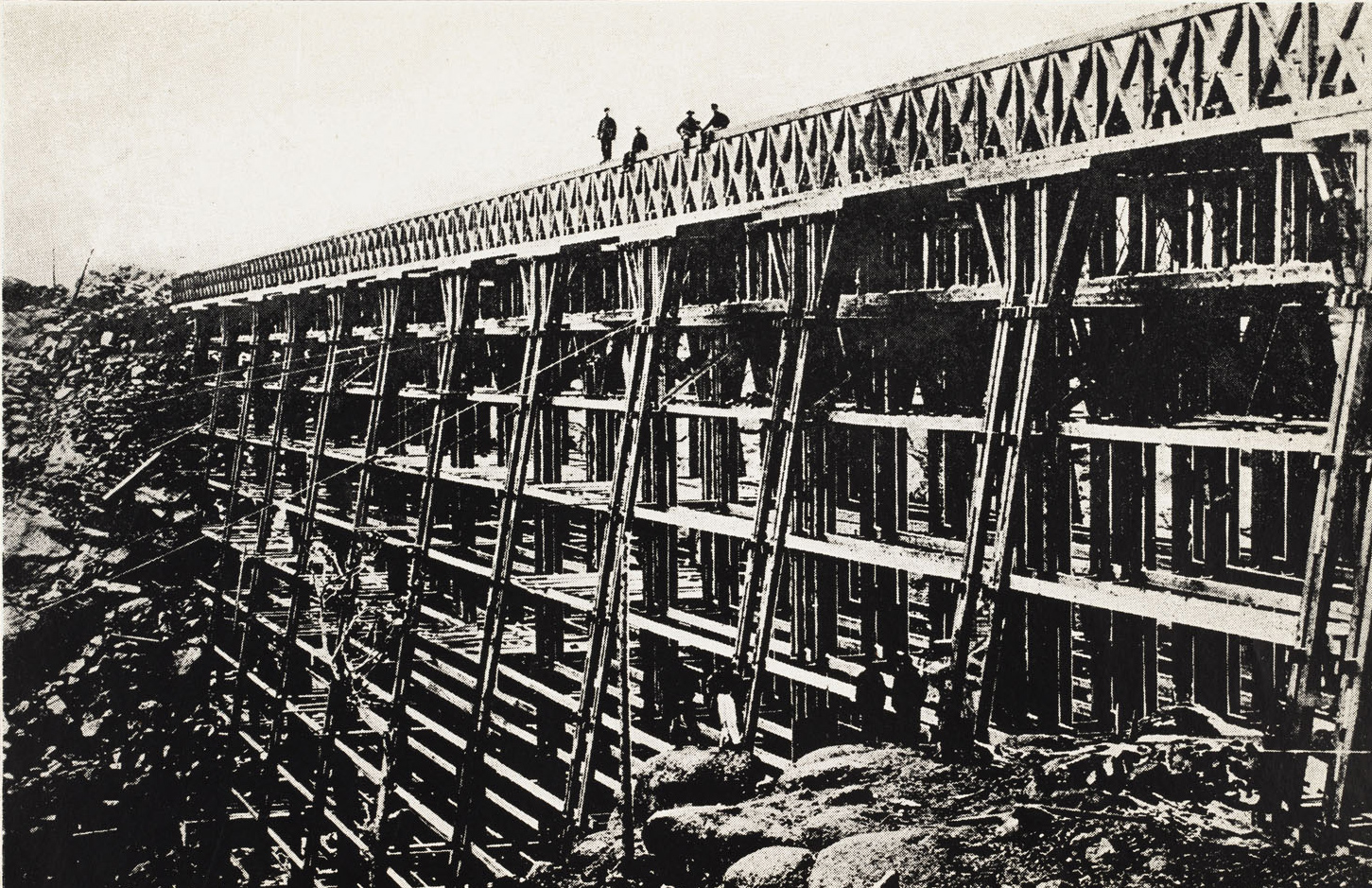
There's a whole trainload of mind boggling facts about the building of the TCRR.  One that really impressed me was the 1750' tunnel in the Sierra Nevada mountains built through solid granite at the rate of one foot per day.  The per-day rate increased to a whopping 1.8' per day when they started using nitroglycerin.

I suppose any civil engineer worth his/her salt knows how to build a tunnel, have that tunnel take the shortest route possible, and finally, come out at exactly the right spot.  I'm not a civil engineer, have no idea how it's done.  Seems a miracle.


Thursday, September 20, 2018

Historic Trails

50 years ago, congress passed the National Historic Trails Act.  Now, the National Park Service manages and administers 19 historic trails.  Most folks know about the Oregon Trail, arguably the most famous of the bunch.  That said, southwestern folks might disagree, claim it's the Santa Fe trail.

I was unaware of the Trails before visiting Golden Spike National Historic Site this summer.  Being a collector of NPS brochures, I gleefully liberated 4 Trails brochures there.  My collection now  numbers 92, including a few duplicates.


The California Trail is the longest at 5600 miles, followed closely by the Trail of Tears, 5045.  Selma-Montgomery is the shortest: 54 miles.  The oldest is the El Camino Real de Tierra Adentro, which dates back to the 16th century; it stretches from northern Mexico to New Mexico.

Several east-west trails share the same routing through the Great Plains, starting from the Missouri River between Omaha and Kansas City; Independence and St Joseph seem to have been the most popular.  The trails then follow the Platte River to various branching off points.

Learn more about the Trails at:
 https://www.nps.gov/subjects/nationaltrailssystem/national-historic-trails.htm