He: "What time do you want to leave?"
She: "What are we gonna do when we get there?"
He: "What time do you want to leave?"
She: "Why do you want to leave so early?"
He: "What time do you want to leave?"
She: "What's the temperature gonna be there?"
He: "The high will be about 95. What time do you want to leave?"
She: "It's only a 2-hour drive."
He: "No, it'll take 3 hours. What time do you want to leave?"
She: "Okay, 3 hours."
He: "What time do you want to leave?"
She: "What time do you want to leave?"
He: "No later than 9 AM."
She: "Okay, 9.........ish."
He: I need a drink!
Tuesday, May 31, 2016


Friday, May 27, 2016
2 Long, 1 Short
If you're under age 60, you're probably clueless about the reference - although you've likely seen pictures of the related device. And, you've likely heard the phrase, 'party line.' We're talking telephones, here. Old telephones. Old systems. In the early/mid 1900s, there were no phone numbers, just long and short ring combinations. The phone ring combination on the farm in MN was 2 long, 1 short.
These were hand cranked phones in wood (yes, wood!) cabinets, attached to the wall, usually near the front door of the house. To make a call, you lifted the earpiece and turned the little crank on the right side of the cabinet, which rang the the little bells located top front - on your phone and all phones on the party line. Each home had it's own unique ring combination of longs and/or shorts. You could call anyone on your party line, about 6 neighborhood homes, but that was it. If you wanted to call someone not on your party line you had to ring the operator for assistance, 1 long.

These were hand cranked phones in wood (yes, wood!) cabinets, attached to the wall, usually near the front door of the house. To make a call, you lifted the earpiece and turned the little crank on the right side of the cabinet, which rang the the little bells located top front - on your phone and all phones on the party line. Each home had it's own unique ring combination of longs and/or shorts. You could call anyone on your party line, about 6 neighborhood homes, but that was it. If you wanted to call someone not on your party line you had to ring the operator for assistance, 1 long.

If you heard someone talking when you lifted the earpiece, you were SOL, had to wait until the other call ended. You had to keep lifting the earpiece every few minutes to see if the line was free. Calls were supposed to be limited to 5 minutes but most people ignored that guideline. If you thought the other call was running long, you'd lift the earpiece and toggle the hook a few times, causing a clicking sound that might inspire the other party line user to wrap it up. Or not.
Oft times, someone in a hurry would lift the earpiece and crank a call before realizing there was another call in progress. Doing that was rude, scared the crap out of the people already on the line, pissed them off. So, you'd quickly apologize and hang up.
Privacy there was not. You could listen to any conversation on your party line, and eavesdropping (rubbernecking) was common. A favorite family trick was to catch a sibling listening in, sneak up behind them and holler, "Gerry Delaney rubbernecking!" Then, run like hell to avoid getting whacked. Discretion was the better of valor, me being the youngest and smallest.
Another, nastier, trick was to ring your own phone, then quickly hang up. This caused all the other phones on the party line to ring. Of course, I - never mischievous and always innocent of all charges - would never think of doing such a dastardly deed.
Thursday, May 12, 2016
Fire Grenade
Ever heard that term, fire grenade? Don't recall ever hearing it called that myself although we had one in our farm home in MN. The name sounds militaristic, but it wasn't built for military use. Which is not to say it had no military application.


Fire Grenade
It was a household fire suppression device, about the size of a softball.
In case of fire, you were supposed to lift this thing out of its holder and throw it at the base of the fire. To my knowledge, it was never used in our home - which is a good thing. A good thing because there was no reason to use it, yes, but also because its effectiveness was iffy at best.
"Holy crap, there's a fire in the kitchen!" All pumped up on adrenaline, you grab the grenade and hurl it at the fire. "Oops!" You overshot the fire by a good 5', and it's the only grenade in the house. Exit stage right. Call your insurance agent.
"What kind of liquid did it contain?" you ask. Excellent question! Above, I hinted about a military application. You better believe it! The bulb was filled with carbon tetrachloride, which, when heated, can produce phosgene gas. Phosgene gas was first used by the Germans in WW I, and caused an estimated 85,000 casualties.
Obviously, the word never got out about the dangerous contents of fire grenades. Since I can remember having one in the house, it was still hanging there in the 1950s - and probably well beyond that. Yeah, not having to use it was a good thing indeed.
Tuesday, May 10, 2016
Lake Powell 2016
This was the second Lake Powell houseboat trip for Trish and me, but the rest of the crew were newbies. We launched from Wahweap Marina, near Page, AZ, spent 4 nights, had a great time.


The Crew in Last Chance Canyon
Sitting L to R: Lisa, Trish and Ranger, Jan, Elaine
Standing L to R: Mike, Terry, Doug, Junior, Eric, David
And a finer crew there never was!

West Canyon where we spent our first 2 nights
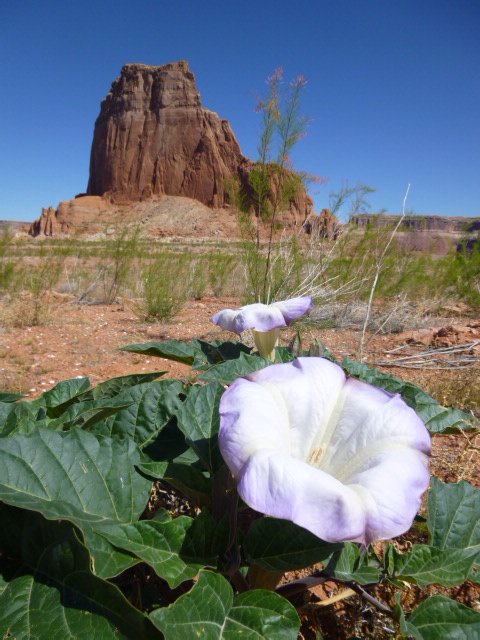
What kind of flower be this, all green and leafy in the desert?
Terry and I hiked to the base of the butte in the background,
saw this specimen along the way.

Happy Hour: it's 5 O'clock somewhere!

We had campfires every night thanks to David, the Fire Master.
This shot taken in Oak Canyon.

We toured Secret Canyon in Junior's powerboat.
I drove the houseboat into this narrow canyon in 2011, had to back out.
Not my fault, the map was wrong.

The 4 kayakers went to the end of Secret Canyon.
Lots of debris there, including beaver-chewed sticks that had
to have traveled a very long way.

How did this circular pattern occur?
Do rocks get ringworm?
Picture taken in Twilight Canyon.

Twilight Canyon pond scum fouled the water intake.
We waved down a passing powerboat and they towed us back to the houseboat.
Doug and Junior cleaned the gunk out of the water intake later, no problem.

Where the hell are we?

Wahweap Campground, where we camped before and after.
Friday, April 29, 2016
C-rats
A couple days back, Trish was preparing and freezing food for our upcoming Lake Powell houseboat trip; pound cake is one of several items on the menu. When I asked her what she was baking, and heard 'pound cake,' I had a flashback. Vietnam: pound cake was the most coveted item in the C-rat meals field soldiers lived on, and the competition to score that precious commodity was fierce. C-rats (combat rations) came in cases of 12 individual boxes. Each meal was different, and only 1 included pound cake.

My first assignment in Nam had me in a rat cage, an underground bunker on the DMZ. There was no electricity, no plumbing, no anything even vaguely associated with civilization as we know it. Sustenance consisted of tepid, tinny-tasting water stored in jerrycans and, of course, C-rats. Every day. Every breakfast. Every lunch. Every dinner. Friggin' C-rats!*
The larger army bases where I spent the last few months of my 1-year 'tour' had mess halls and the chow was quite good. However, I didn't spend much time in base camps, was out in the jungle more often than not, and (Whoopee!) living on C-rats. C-rats weighed in at 1.5 pounds each, could only carry 3-4 days worth because you also had to carry 2-4 canteens of water, rifle, ammo, sleeping gear, personal items, etc. Humping half your body weight up steamy jungle mountains burned lots of calories, had to consume lots and lots of good 'ol C-rats.

Towards the end of my 12-month 'tour' in Nam, we occasionally got the new version of army haute cuisine: LRPs (Long Range Patrol Rations, later called MREs, Meals Ready to Eat). These were freeze-dried, one-course meals in heavy duty, shrink-wrapped plastic bags. They were better - and much lighter - than C-rats, but you had to heat water to boiling, pour it into the bag and stir for a few minutes before you could eat, took too darn long. And, if out in the jungle on search and destroy missions, you had to carry more water, and Sterno or some other fuel; C4 plastic explosive was best, burned really hot, but hard to come by.

On the flip side of pound cake was ham and lima beans, the least favorite of all C-rats. Soldiers often swapped food items, and on rare occasions you might find someone who actually liked ham and limas. "Hey Joe, wanna swap your pound cake for my ham and lima beans?" Joe: "Up yours!"

Tobasco was my salvation, as it was for many others. I might leave my flak jacket behind but never the Tobasco sauce.
*There was one memorable exception: on Thanksgiving day, a chopper dropped off a hot, delicious turkey dinner packed in insulated containers. My 2 fellow advisors and I really packed it in that day.


Typical C-rat meal.
The coffee made you gag but instant chocolate was drinkable.
Towards the end of my 12-month 'tour' in Nam, we occasionally got the new version of army haute cuisine: LRPs (Long Range Patrol Rations, later called MREs, Meals Ready to Eat). These were freeze-dried, one-course meals in heavy duty, shrink-wrapped plastic bags. They were better - and much lighter - than C-rats, but you had to heat water to boiling, pour it into the bag and stir for a few minutes before you could eat, took too darn long. And, if out in the jungle on search and destroy missions, you had to carry more water, and Sterno or some other fuel; C4 plastic explosive was best, burned really hot, but hard to come by.

LRRPs (pronounced lurps)

Something the dog left behind? Fake barf?
Nope: ham and lima beans!
Winner, Most Repulsive Food Ever Contest.
Tobasco was my salvation, as it was for many others. I might leave my flak jacket behind but never the Tobasco sauce.
*There was one memorable exception: on Thanksgiving day, a chopper dropped off a hot, delicious turkey dinner packed in insulated containers. My 2 fellow advisors and I really packed it in that day.
Friday, April 22, 2016
Fungus!
Fungus, bacteria and mold, oh my! While dining out at Barley Bros last night, Trish and I had a brief discussion about these little critters. It got started because a woman at a nearby table was browsing the menu, and said she didn't like mushrooms. Mushrooms are a type of fungus, you know.
Trish and I love mushrooms. That's not to say we're flaming fungus fans, flagrantly flaunting our fondness for the full fungus family. Ogaricus bisporus (common mushrooms) are great but onychomycosis (toenail fungus) not so much. Even the best of families have the occasional black sheep.
Our discussion continued with me wondering out loud if fungus and mold were related. Is one a subset of the other? Are they siblings? Are they totally unrelated? Awfully heavy stuff for casual dinner conversation but what can you do? My ever-curious mind is constantly compelling me to boldly go where no man has gone before (unless they were really, really bored). And, of course, I am further compelled to memorialize those strange odysseys here on my blog.
Mold and mildew are indeed members of the fungi family, as is yeast. Fungi are neither plant nor animal. They're an entirely different life form called planimal (not really, just made that up, gotta call 'em something). Fungi have their own kingdom,1 of the 6 biological kingdoms that include all life forms.
Bacteria are so plentiful and diverse that they have 2 kingdoms, and also the distinction of being the first living thing on earth. Bacteria biomass on earth exceeds the combined total of all plants and animals. Prolific little buggers.
Viruses don't have their own kingdom, nor are they a member of any other kingdom. In fact, biologists claim that viruses are non-living particles because they have no cells. They must attach themselves to a host cell to reproduce. Try as you might, you can't kill a virus. You can't kill something that was never alive in the first place. But: you can kill the host cell. That's reassuring for chest cold sufferers: simply remove your lungs and you're good to go.
Trish and I love mushrooms. That's not to say we're flaming fungus fans, flagrantly flaunting our fondness for the full fungus family. Ogaricus bisporus (common mushrooms) are great but onychomycosis (toenail fungus) not so much. Even the best of families have the occasional black sheep.
Our discussion continued with me wondering out loud if fungus and mold were related. Is one a subset of the other? Are they siblings? Are they totally unrelated? Awfully heavy stuff for casual dinner conversation but what can you do? My ever-curious mind is constantly compelling me to boldly go where no man has gone before (unless they were really, really bored). And, of course, I am further compelled to memorialize those strange odysseys here on my blog.
Mold and mildew are indeed members of the fungi family, as is yeast. Fungi are neither plant nor animal. They're an entirely different life form called planimal (not really, just made that up, gotta call 'em something). Fungi have their own kingdom,1 of the 6 biological kingdoms that include all life forms.
Bacteria are so plentiful and diverse that they have 2 kingdoms, and also the distinction of being the first living thing on earth. Bacteria biomass on earth exceeds the combined total of all plants and animals. Prolific little buggers.
Viruses don't have their own kingdom, nor are they a member of any other kingdom. In fact, biologists claim that viruses are non-living particles because they have no cells. They must attach themselves to a host cell to reproduce. Try as you might, you can't kill a virus. You can't kill something that was never alive in the first place. But: you can kill the host cell. That's reassuring for chest cold sufferers: simply remove your lungs and you're good to go.
Sunday, April 10, 2016
The Band
There were 5 of us at first: Bob, Dan, Don, Ronnie and me. A girl, Leona, joined the class later - but too late to be a member of The Band.
St Joseph grade school, near Perham, MN, was typical of country grade schools back in the day. The 2-story brick schoolhouse was staffed with 2 teachers who taught 4 grades apiece. Our class was average in size, the total student count about 45. The class ahead of us had an even dozen, the largest ever (must have been a really cold winter the year that bunch was conceived). It was in 1954 that the 1-4 grade teacher decided to create The Band.

Dan, a big kid for his age, was the drummer. Bob played coronet, Ronnie was bass guitar player, Don was on the harmonica, and I was lead guitar. We played mostly popular tunes, big band stuff and a few old standards that had withstood the test of time. We entertained at wedding receptions, bingo potlucks and the like.
And I'm the king of Denmark. The truth: we had no musical instruments whatsoever, and our repertoire consisted of 3 simple tunes. Mary Had a Little Lamb was our opener. The music - I use the term loosely - was produced by blowing over the tops of pop bottles, partially filled with water. Yes sir, we were the rompin,' stompin,' St Joseph Grade School Pop Bottle Band! And we had 'uniforms': jeans, white shirts and silly-ass hats made from the bottoms of rolled oats boxes. The hats, covered with green wrapping paper, were held in place with an elastic chin strap. Were we super cool, or what?
We retired from the music business after 2 performances, never having made the Top 40. Hey, we were only 10 years old! And, being farm kids, we didn't have a lot of spare time to develop our musical skills. I had zero interest in learning to play a musical instrument anyway, so no great loss.
Only one of us, Bob, ever played a real musical instrument - which was in, fact, the coronet. He played in the high school band, don't know if he continued playing beyond that, haven't seen him in 5+ decades.
St Joseph grade school, near Perham, MN, was typical of country grade schools back in the day. The 2-story brick schoolhouse was staffed with 2 teachers who taught 4 grades apiece. Our class was average in size, the total student count about 45. The class ahead of us had an even dozen, the largest ever (must have been a really cold winter the year that bunch was conceived). It was in 1954 that the 1-4 grade teacher decided to create The Band.

St Joseph Grade School
Dan, a big kid for his age, was the drummer. Bob played coronet, Ronnie was bass guitar player, Don was on the harmonica, and I was lead guitar. We played mostly popular tunes, big band stuff and a few old standards that had withstood the test of time. We entertained at wedding receptions, bingo potlucks and the like.
And I'm the king of Denmark. The truth: we had no musical instruments whatsoever, and our repertoire consisted of 3 simple tunes. Mary Had a Little Lamb was our opener. The music - I use the term loosely - was produced by blowing over the tops of pop bottles, partially filled with water. Yes sir, we were the rompin,' stompin,' St Joseph Grade School Pop Bottle Band! And we had 'uniforms': jeans, white shirts and silly-ass hats made from the bottoms of rolled oats boxes. The hats, covered with green wrapping paper, were held in place with an elastic chin strap. Were we super cool, or what?
We retired from the music business after 2 performances, never having made the Top 40. Hey, we were only 10 years old! And, being farm kids, we didn't have a lot of spare time to develop our musical skills. I had zero interest in learning to play a musical instrument anyway, so no great loss.
Only one of us, Bob, ever played a real musical instrument - which was in, fact, the coronet. He played in the high school band, don't know if he continued playing beyond that, haven't seen him in 5+ decades.
Subscribe to:
Posts (Atom)